
The future of the city
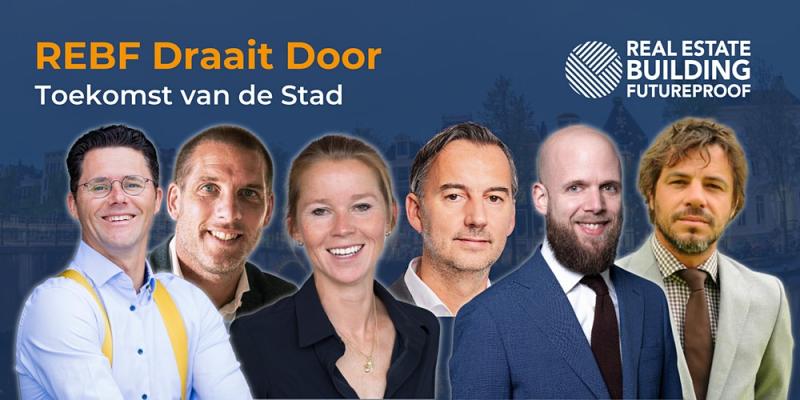
The future of the city | 4-02-2022
Bas Ambachtsheer, CTO at Colliers, told all about the developments within his field. We talked about smart and healthy buildings, optimal services and other developments within the theme 'The Future of the City'. In addition, Karin van der Ven and Wietse Verheul of Amvest were our guests. They took us through the story of LIVVIN, the new housing concept of Amvest.
Watch, read or listen back to the table discussion.

In conversation with Karin van der Ven,
General Manager Fuzer
&
Wietse Verheul,
Manager Commercial Support Amvest
LIVVIN: Amvest's new residential concept
The idea for LIVVIN came about in 2019 after Amvest was inspired by Cruquius residents to think about a way to increase the enjoyment of living by improving services and connecting residents.
Livvin is the new residential service concept of Amvest. The goal is to increase customer satisfaction, residential enjoyment and the feeling of safety among residents.
Opportunities for the future
Wietse Verheul, Manager of Commercial Support at Amvest, sees many opportunities for LIVVIN in the future. "Integrated housing concepts, residential buildings with amenities, co-living, and co-housing: these are all areas where LIVVIN can play a major role. Because we’re involved in these areas, we can learn a lot, and quickly.”
"Amvest has an important goal: to increase customer satisfaction, enhance the quality of life, and improve safety. Why do you think that’s so important?"
You find that it's important to invest retirement money in things that are socially responsible. Even better: in things that might also have social impact. With the way we approach this, we are trying to have an impact, for example, on the residential experience of all of Amvest's end users, by trying to combat loneliness, for example, by creating a connection between residents. That is one of the main motivations for doing it.

"Did it start with a customer need? Or is it more based on the vision of Amvest or an investor who made this possible?"
Karin: "It's the same thing in this case. It's for Amvest to put the customer at the center. That’s why, when developing the concept, we focus primarily on what the customer needs. We do this by continuously assessing: what are their preferences and wishes? What services are needed to optimize their living experience? We constantly stay on top of things and give residents a say. There are also needs that are invisible—the latent needs. We only realize there’s a need for something once we launch a feature in the app, even though no one asked for it beforehand. We always try to keep this interaction at the center of our approach."
"The concept comes together in an app. But isn't the whole concept much more than just an app?"
The app is one channel that we use. Another component is really the human being, the community manager, who we deploy on location. And there really is a community living room in the building.
"The surroundings and the neighborhood where the complex is located are also very important. How do you take those into account?"
The neighborhood is involved by partnering with local entrepreneurs, for example. It is precisely about connecting the neighborhood with each other. That includes entrepreneurs, of course. We want them to flourish. This can be done, for example, by having the entrepreneurs also offer a service in the app. Think of offering a discount, an action or organizing an activity where residents are then welcome.
We organize activities in a building, such as Friday afternoon drinks. That sounds like an open door, but often that is very welcome in a neighborhood and a lot of people always join in.
"I can imagine that, in addition to greatly improving the residents’ comfort and happiness, this also brings significant benefits to Amvest. You end up with people who are much happier in their surroundings. They might stay as tenants longer, or if someone moves out, they might recommend someone else. Does it really work that way?"
We are indeed seeing lower (financial) vacancy rates. A lower mutation rate and higher tenant satisfaction. Our goal is that satisfaction. As Amvest, we always try to take social responsibility and focus on tenant satisfaction.
"You also have to deal with customer processes—core processes. A customer wants to pay rent, report a nuisance, and so on. How do you incorporate that into the bigger picture? Are you taking steps to digitize those processes as well?"
Yes, definitely. We work with many partners that we depend on. For example, a lot of partners work with Holland ConTech & ProptTech, another part of the partners work again with Zig Real Estate. Our property managers are crucial. We work with the property managers to see how we can increase tenant satisfaction even further. What is needed for this? There are quite a few ideas and enthusiasm coming from the property managers and we as Amvest to go along with this as well as possible.
"When we look to the future—you want to expand in a certain direction: what services would you like to see added to the current concept?"
The concept stands, but we are going to keep expanding the concept. Think for example of smart building services, an even better customer experience. In the app, the possibilities are actually endless. There are many opportunities for further expansion.
"More and more of our services are being provided digitally. At the same time, personal contact is also crucial, which is why we have community managers. In your opinion, what percentage of your services will eventually be provided digitally?"
As much as possible will soon be done digitally. By digitizing the primary processes, the community manager has the opportunity to have real conversations with residents about things that concern them. It is precisely to add that extra layer of creativity that we are trying to digitize as much as possible.
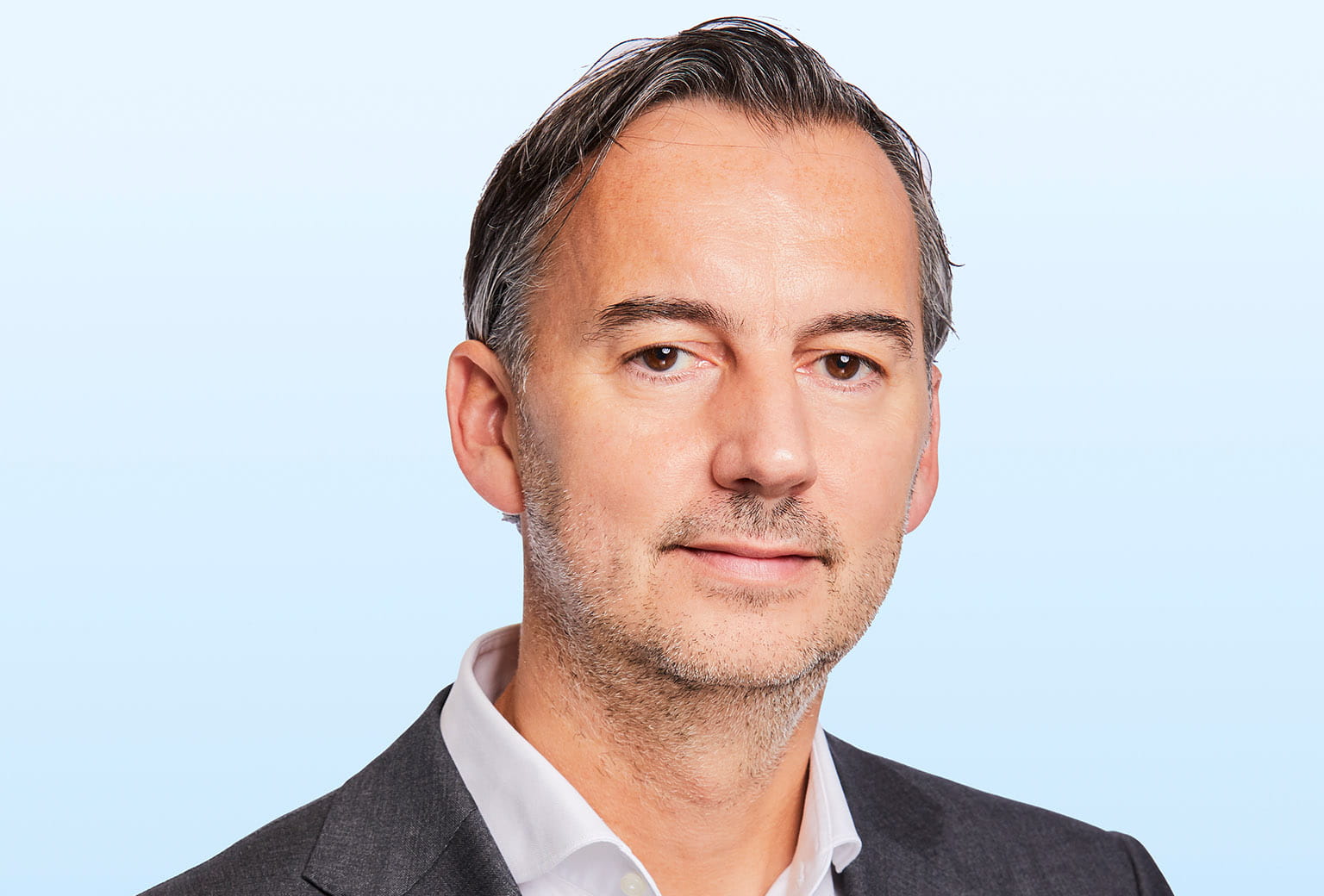
Bas Ambachtsheer, CTO at Colliers
In conversation with Bas Ambachtsheer
"What proposal are you currently working on?"
I’m working on several things, such as the ‘operator role’ in a building. When you look at a building, you see that it’s incorporating more and more functionalities. Tenants have different needs. They want more flexibility. We’re working to provide this flexibility throughout the entire building. Not just by managing the flexenvironment, but also by making services accessible throughout the building. These days, we’re much more about treating people as guests. So it’s much more about hospitality and experience , as well as a digital 'backbone,' which allows you to track everything you do in the building on a single invoice . This way, asset managers are relieved of the burden, and you go beyond property management. It all comes together on a single platform.
"We're talking about the future of the city. What role will buildings play in the world of tomorrow?"
We look at this in two ways. First, a building is always part of its environment. We should never forget that. When thinking about how a building can become attractive, it is important to look carefully at what surrounds it. If you're going to develop a building, where is there room for development? What can you do in terms of furnishings and services? You can very much use the power of the environment.
You see buildings becoming more and more 'branded': positioned as a brand. We see that we have to offer more and more services that match the 'brand' of the building. The hospitality, the furnishings ... everything becomes one concept. Then you have to look at what tools and technology you need to serve the concept and make it very intuitive, so you don't have cumbersome processes.
A lot of owners still do not know exactly what is happening in their building. With one building, it is very easy to follow. With more buildings, some owners say it is no longer possible, but it is important to make that precisely to hold on to. We believe that with managed service contracts and community managers can ensure that the building is well managed on a daily basis. It's a business. You want from the owner happy customers, but also just get the right dollars per square foot out of it.